Cord management fails in one of two ways: the strap will not close, or it closes and then works loose. Those are different problems with different answers. Length decides the first, width decides the second, and both come out of one multiplication that almost nobody does before buying.
A strap has to reach around the bundle, so the length you need is the circumference plus enough overlap for hook to land on loop. Circumference is pi times the diameter, and two inches is a workable overlap allowance for consumer straps. That is why a six inch tie, the most common size sold, closes a bundle of about 1.3 inches and no more: it is a handful of desk cords, not a coiled extension lead. Width is the separate question of whether the closed bundle stays closed while it hangs on a hook and swings.
Sizing by what you are actually holding
What you are bundling
Length
Width
A few cords behind a desk
6 in ties
Up to 0.5 in
A coiled extension cord
12 to 15 in, or cut to length
1 in
Hose, rope, heavy coils
Cut to length
1 in
Lumber, mats, gear that springs apart
12 to 15 in elastic
2 in
The lineup
8 items
Cut to the bundle
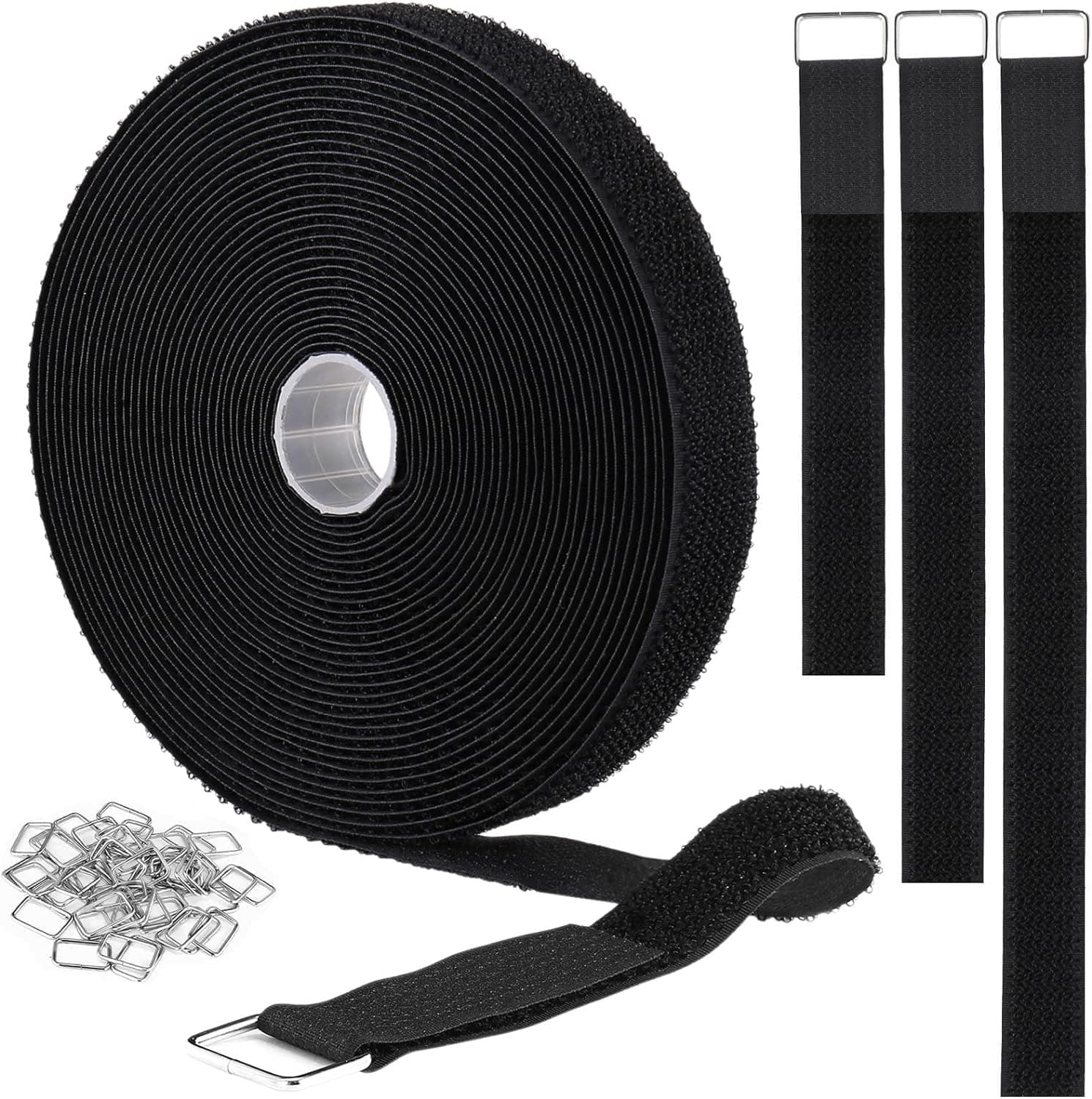
YMCRLUX
YMCRLUX Hook and Loop Strap Roll, 1 in x 32 ft
Width
1 in
Roll length
32 ft
Buckles
50
A 1-inch by 32-foot nylon roll with 50 metal buckles, cut to whatever length you need. The strap sizing page works out that a bundle needs its circumference plus about two inches of overlap, and a roll lets you cut exactly that instead of choosing between two inches short and a foot of flapping tail. For the job this category exists to do, bundling cords so they stay bundled, a strap sized to the bundle is the one that does not work loose.
Cut to length, so the strap matches the bundle instead of approximating it
Thirty-two feet at 8 inches a strap is 48 straps, which outlasts most packs
One inch wide suits extension cords and hoses rather than only desk cords
Metal buckles let a strap cinch and hold rather than only wrap
Cutting is a step, and cut nylon frays unless you seal the end
Buckle straps take longer to fasten than a plain wrap tie
A roll gives you one width, so it cannot span desk work and heavy coils
Best forA garage with bundles of genuinely different sizes, where no single fixed length has ever been right.
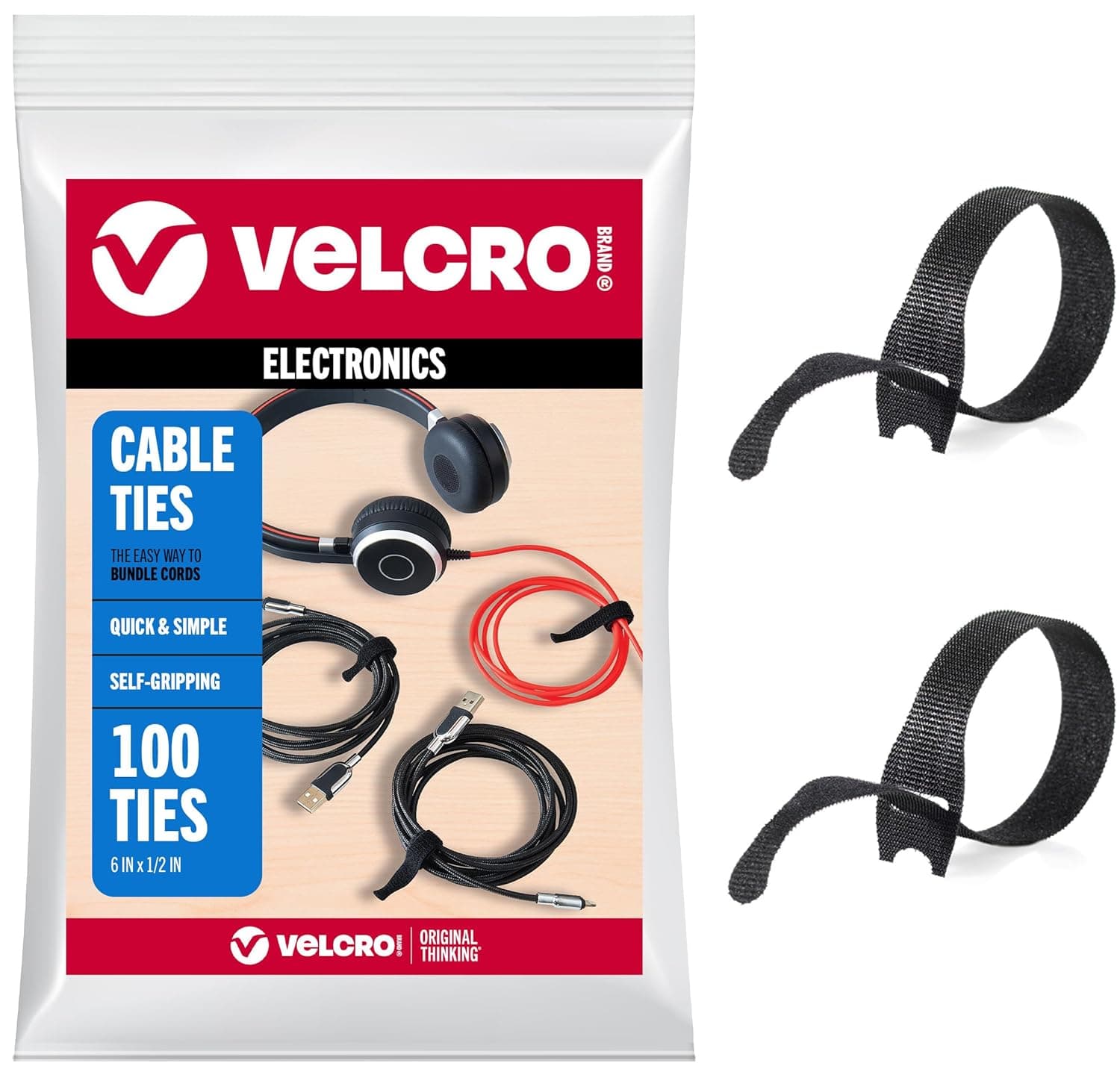
One hundred adjustable hook and loop ties, 6 inches long, described for desks, workstations and gaming setups. Six inches closes a bundle of roughly 1.3 inches diameter once you allow overlap, which is a handful of cords rather than a coiled extension lead. At a hundred to a pack, the calculation is less about each tie than about never rationing them.
A hundred ties means using one wherever a cord needs it, not saving them
Adjustable rather than fixed, so the same tie handles two or five cords
Six inches is the right length for the desk bundles it is sold against
Reusable, so rerouting a desk does not consume the pack
Six inches will not close a coiled extension cord, whatever the count
Hook and loop fails by contamination in a dusty garage long before it wears out
Width is not stated, so load-holding capability is unknown
Best forDesks, benches and media setups, where the number of small bundles is the problem rather than their size.
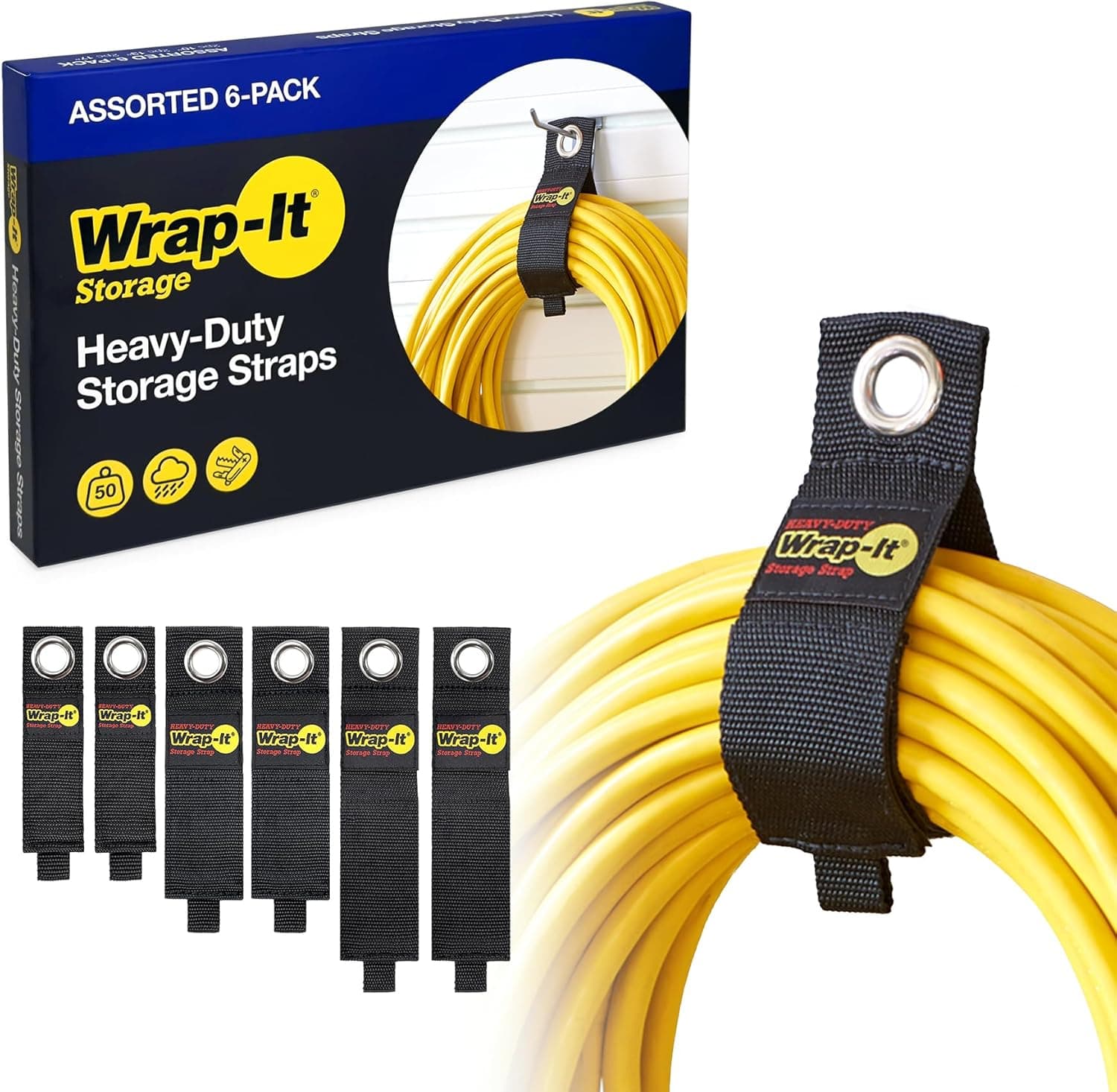
Six heavy-duty storage straps in assorted lengths, described for extension cords, hoses and RV accessories. Assorted lengths is a hedge against exactly the sizing problem this category has: rather than guessing one size, the pack spans several. That makes it a reasonable first purchase when you have not measured anything yet.
Assorted lengths cover several bundle sizes without measuring first
Named against hoses and RV gear, so sized beyond desk cords
Heavy duty construction suits a strap that hangs on a hook under load
Six straps is enough to cover a garage wall of coiled things
The listing does not state what the assorted lengths actually are
Six straps is a small count if you have many bundles
No width stated, so the load spread over a hook is unknown
Best forA first pass at a garage wall, where you do not yet know which lengths you will end up needing.
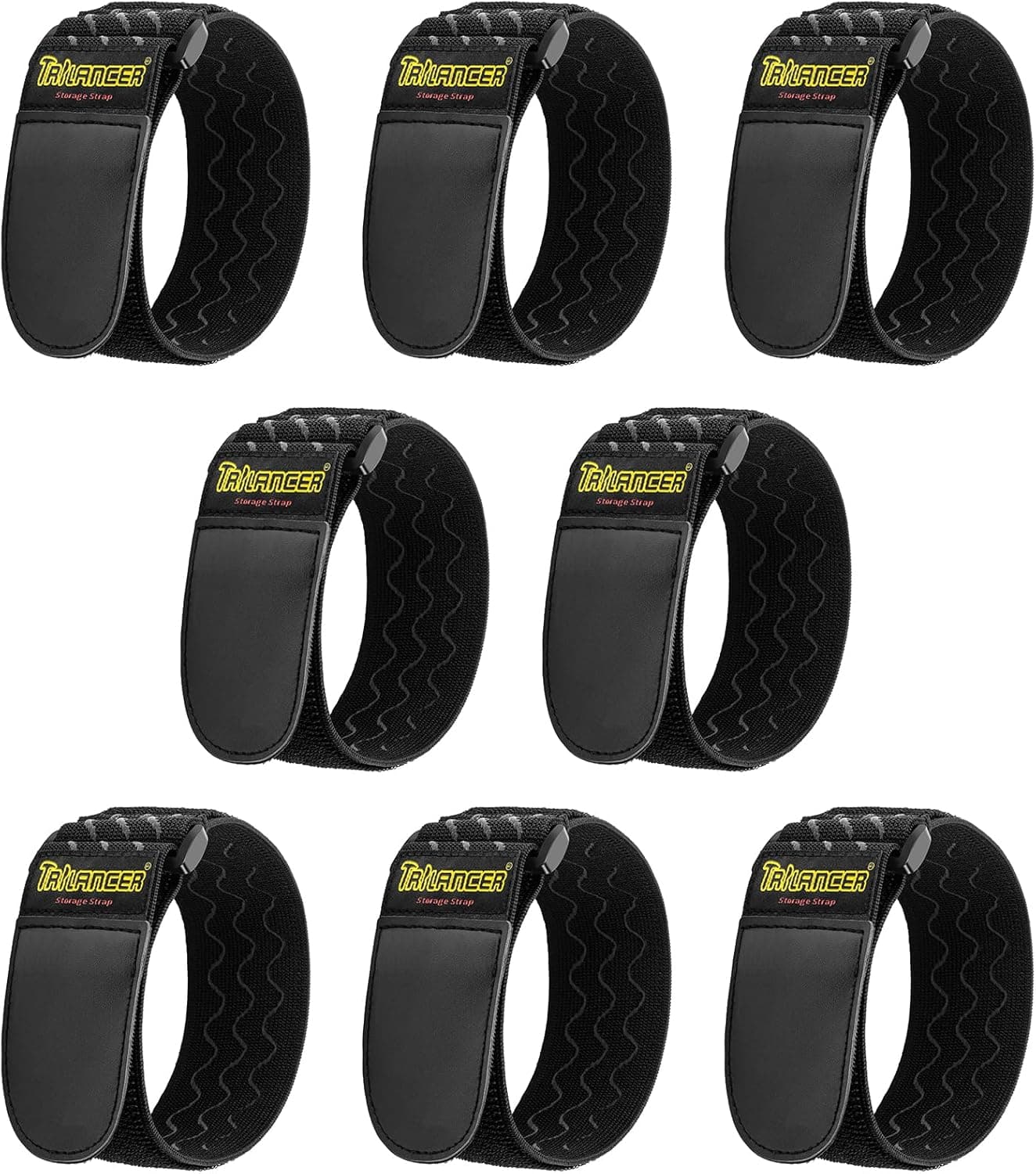
Eight heavy-duty elastic straps, 12 by 2 inches, with anti-slip strips, described for cords, ropes, hoses and bikes. Two inches is the widest strap here, and width is what stops a heavy coil working loose as it swings on a hook. The anti-slip strips address the same failure from the other direction.
Two inches wide, which spreads load and resists a coil working loose
Elastic keeps tension as a bundle settles rather than going slack
Anti-slip strips address slipping directly rather than relying on grip alone
Eight straps is a workable count at this size
Elastic can be pulled genuinely tight, which crushes cord insulation
Twelve inches closes a bundle of about three inches diameter and no more
Two inches is unnecessarily wide for desk cords
Best forLoads that want to spring apart, such as coiled hose, rope and awkward bike gear.
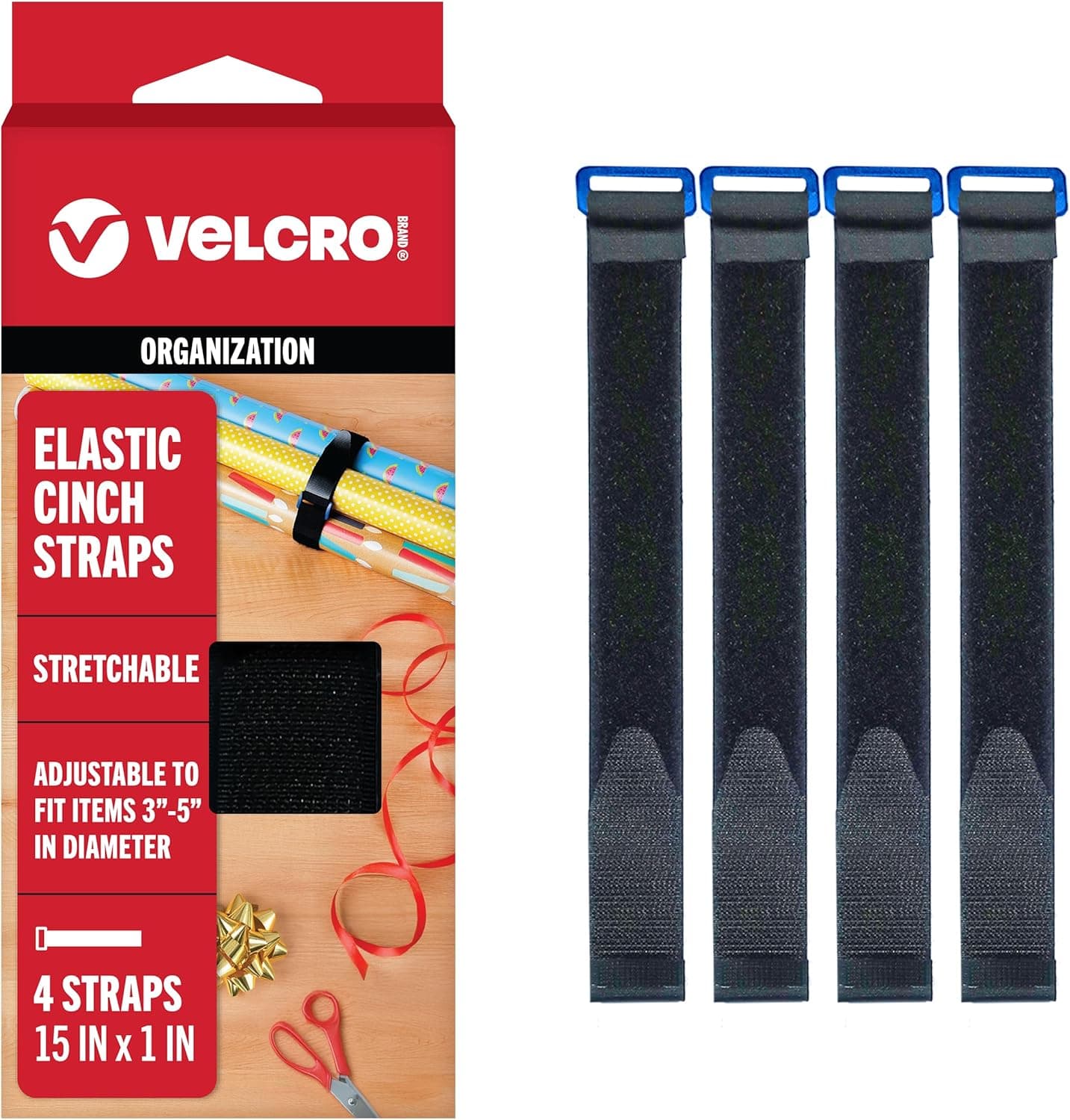
VELCRO Brand Elastic Cinch Straps, 15 x 1 in, 4-pack
Count
4
Size
15 x 1 in
Closure
Buckle, elastic
Four stretchable straps, 15 by 1 inch, with a buckle closure, described for lumber, mats and camping gear. The buckle is the difference from a plain wrap tie: it holds tension rather than just position, which is what a load that shifts needs. Fifteen inches reaches a bundle of about four inches diameter with overlap to spare.
A buckle holds tension, which suits loads that settle after strapping
Fifteen inches reaches larger bundles than any of the 6 inch ties here
Named against lumber and mats, so it is sized for awkward loads
Elastic means one strap covers a range of bundle sizes
Only four straps in the pack
Elastic tension is the wrong behavior on a cord bundle you do not want compressed
A buckle is slower to fasten than hook and loop
Best forCamping and load-carrying gear, where the bundle moves and a plain wrap works loose.
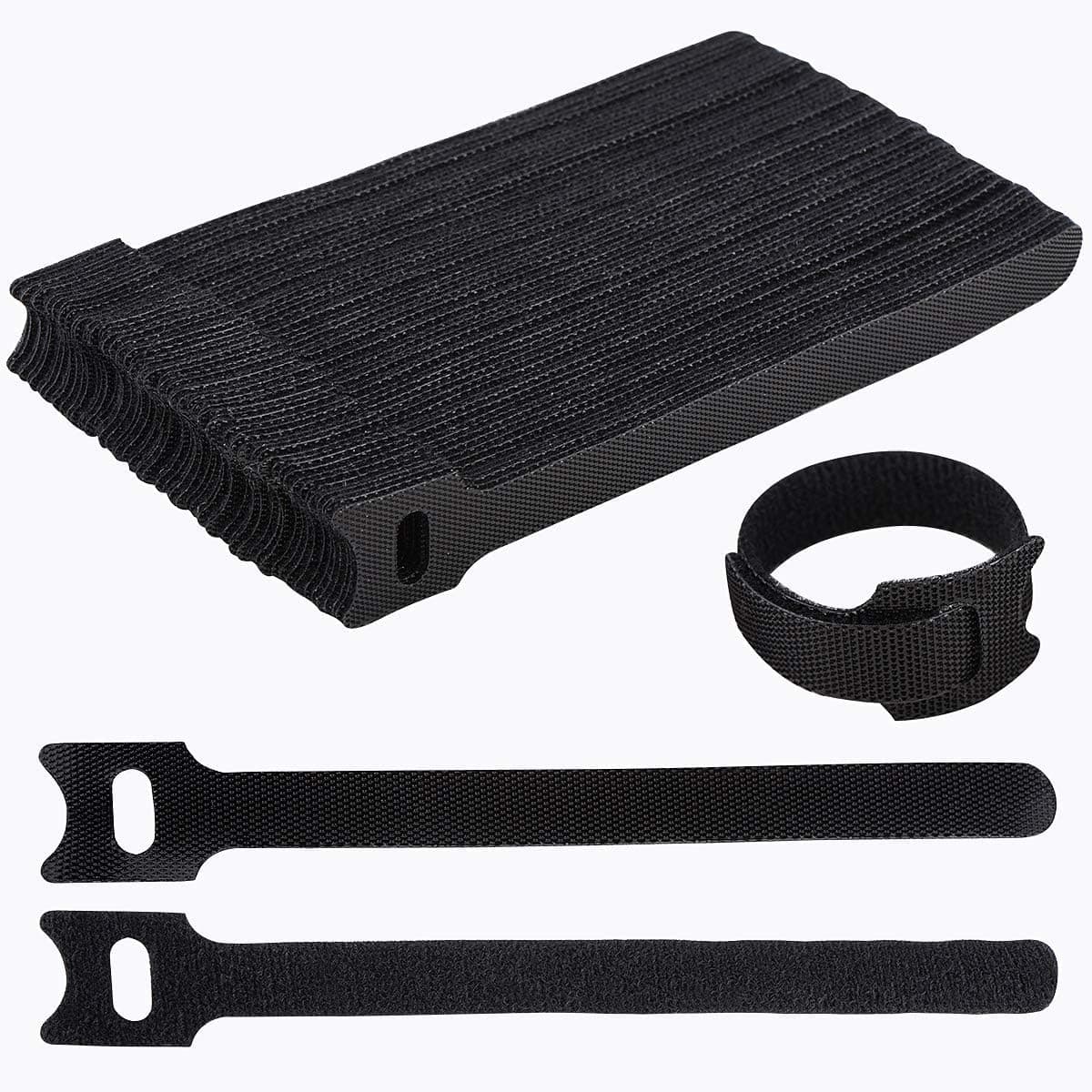
Sixty adjustable hook and loop ties, 6 inches long, described as cord organizers. Functionally this covers the same ground as the hundred-pack, at a smaller count. Six inches is desk territory, and adjustable means one tie handles a range of small bundles rather than one size.
Sixty ties is enough to do a whole desk and a media cabinet
Adjustable, so the same tie suits two cords or six
Reusable, which matters when cabling gets rearranged
Small enough to keep a handful in a drawer near where cords accumulate
Six inches does not reach a coiled extension cord
Width is not stated, so heavy bundles are a guess
Hook and loop clogs with dust and pet hair over time
Best forTidying a workstation where the bundles are small and there are a great many of them.
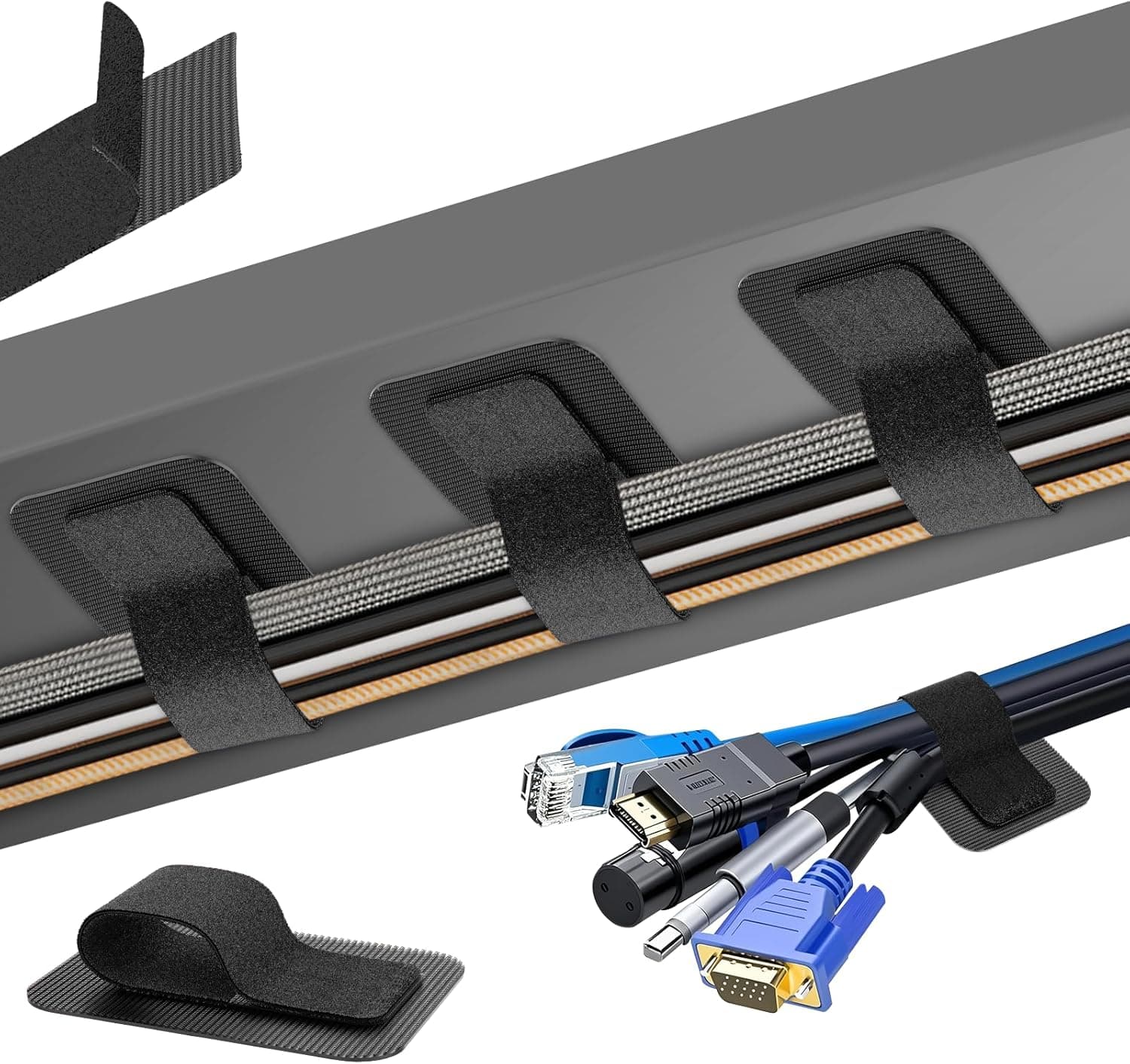
Twenty pairs of reusable adjustable ties that leave no residue, described as holding up to 15 cords. The residue claim is the point of difference: these are aimed at rented desks and surfaces you are not allowed to mark, where an adhesive clip is not an option.
Leaves no residue, which suits rented and finished surfaces
Stated to hold up to 15 cords, which is a real bundle rather than a token one
Sold in pairs, so a run of cords can be caught at two points
Reusable rather than a single-use tie
Length is not stated, so bundle diameter has to be inferred from the cord claim
Aimed at desks rather than at garage loads
Twenty pairs is a moderate count for the price of a specialist item
Best forA desk in a rental, or any surface where an adhesive mount is not acceptable.
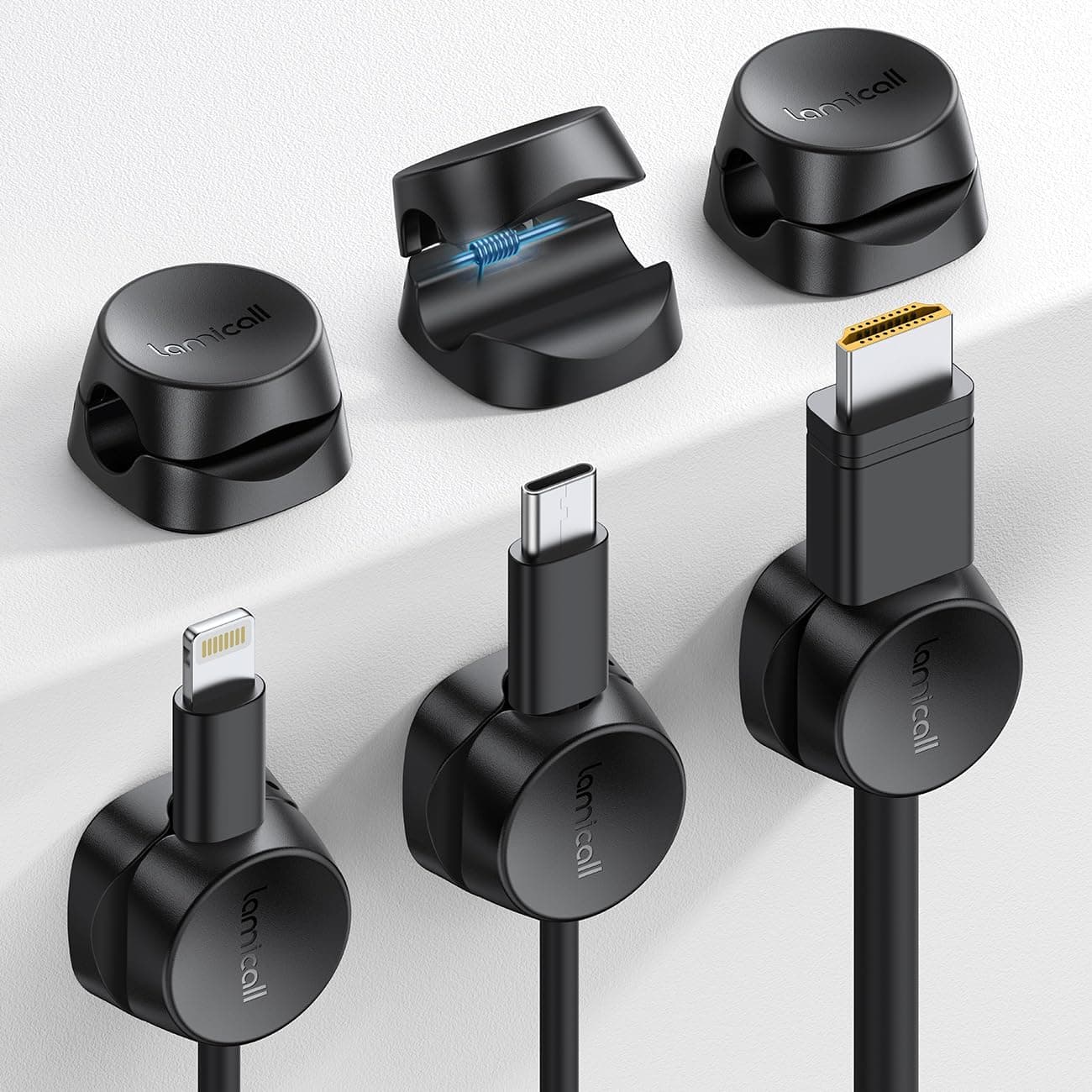
Six adhesive spring clips, adjustable, described for a desk, a nightstand or a car. These are not straps at all: a clip holds a cord end where you can find it rather than bundling a coil. That is a different job, and it is the one that stops a charging cable disappearing behind a desk.
Holds a cord end in place, which no strap in this category does
Spring action grips a range of cord diameters
Adhesive mount means no drilling into furniture
Small enough to sit unnoticed on a nightstand or a dashboard
Not a bundling product, so it does not replace a strap
Adhesive fails on textured, dusty or cold surfaces
Six clips is a small count for something used one per cord end
Best forStopping a charging cable falling behind the furniture, rather than tidying a coil.
VELCRO Brand Elastic Cinch Straps, 15 x 1 in, 4-pack
4
15 x 1 in
Buckle, elastic
Nettbe Reusable Cable Ties, 60-pack, 6 in
60
6 in
Hook and loop
Under-Desk Cable Ties, 20 pairs
20 pairs
Not stated
Not stated
Lamicall Spring Cord Holder Clips, 6-pack
6
Not stated
Adhesive
Before you trust this
A strap is not a repair. A cord with damaged insulation is not made safe by being bundled neatly, and OSHA rules on flexible cords exist because damaged cords in service start fires.
A coiled cord under load runs hotter than the same cord laid out flat. Coil and strap cords for storage, and run them out before you draw current through them.
Cinching an elastic strap to its limit crushes the insulation of whatever sits in the middle of the bundle. Snug is the target and tight is not.
Lifespan and care
Hook and loop fails by contamination long before it fails by wear. Sawdust, grit and pet hair pack into the loop face and stop the hook engaging; a stiff brush recovers most of it.
Straps that live on a garage floor do not last. Hang them on the same hook as the thing they strap, and they stay usable for years.
Cut nylon frays. Seal a cut end with a brief touch of heat, or the strap unravels from the cut inward.
Adhesive clips fail at the adhesive, not the clip, and they fail faster on textured, dusty or cold surfaces. Clean and warm the surface first or expect them to let go in winter.
Measure the bundle across its widest point, multiply by 3.14 for the circumference, then add about two inches for overlap. A two inch bundle therefore wants a strap of roughly 8.3 inches, which is why six inch ties so often fall an inch or two short.
Why does my strap keep coming undone on the hook?
That is usually a width problem rather than a length one. A narrow strap concentrates the holding force on a thin band, and a heavy coil swinging on a hook works itself loose. Wider straps also spread the load across more of the hook so they are less likely to slide off the end.
Hook and loop or elastic with a buckle?
Hook and loop holds at whatever length you set and does not pull tighter, which is right for cords. Elastic keeps tension as a load settles, which is right for things that shift, and wrong for a cord bundle you do not want compressed.
Is a cut-to-length roll worth it?
If your bundles genuinely differ in size, yes, because it removes the sizing problem entirely. A 32 foot roll cut into 8 inch straps yields 48 of them. If everything you strap is roughly the same size, a fixed-length pack is simpler.