Shelving is bought on a number that is easy to misread. Some listings state capacity per shelf, some state a total for the unit, and some state one bare figure without saying which it is, which changes the answer by a factor equal to the tier count. On top of that, every one of those figures assumes a load spread evenly and set down gently, which is not how a garage works.
The real trade is load against floor area. A garage rarely runs out of capacity before it runs out of wall, so the useful comparison is stated capacity divided by the footprint it occupies. This site puts every unit on that basis in the table below, dividing any stated total by the tier count to get a per-shelf figure, and treating a bare unqualified number as a total. That reading is deliberately pessimistic: overestimating a shelf is how a shelf ends up on the floor.
Reading a shelving listing
What the listing says
How to read it
What to check next
A figure per shelf
Usable directly, compare against your planned load per shelf
Whether it holds at every tier position
A total for the unit
Divide by the tier count for the per-shelf share
Whether the heaviest shelf exceeds that share
One bare number, unqualified
Assume it is a total, which is the pessimistic reading
Whether a per-shelf figure exists anywhere in the listing
No figure at all
Nothing to plan against; treat it as light duty
Whether you can accept not knowing
The lineup
7 items
Most stated load per square foot
VEVOR
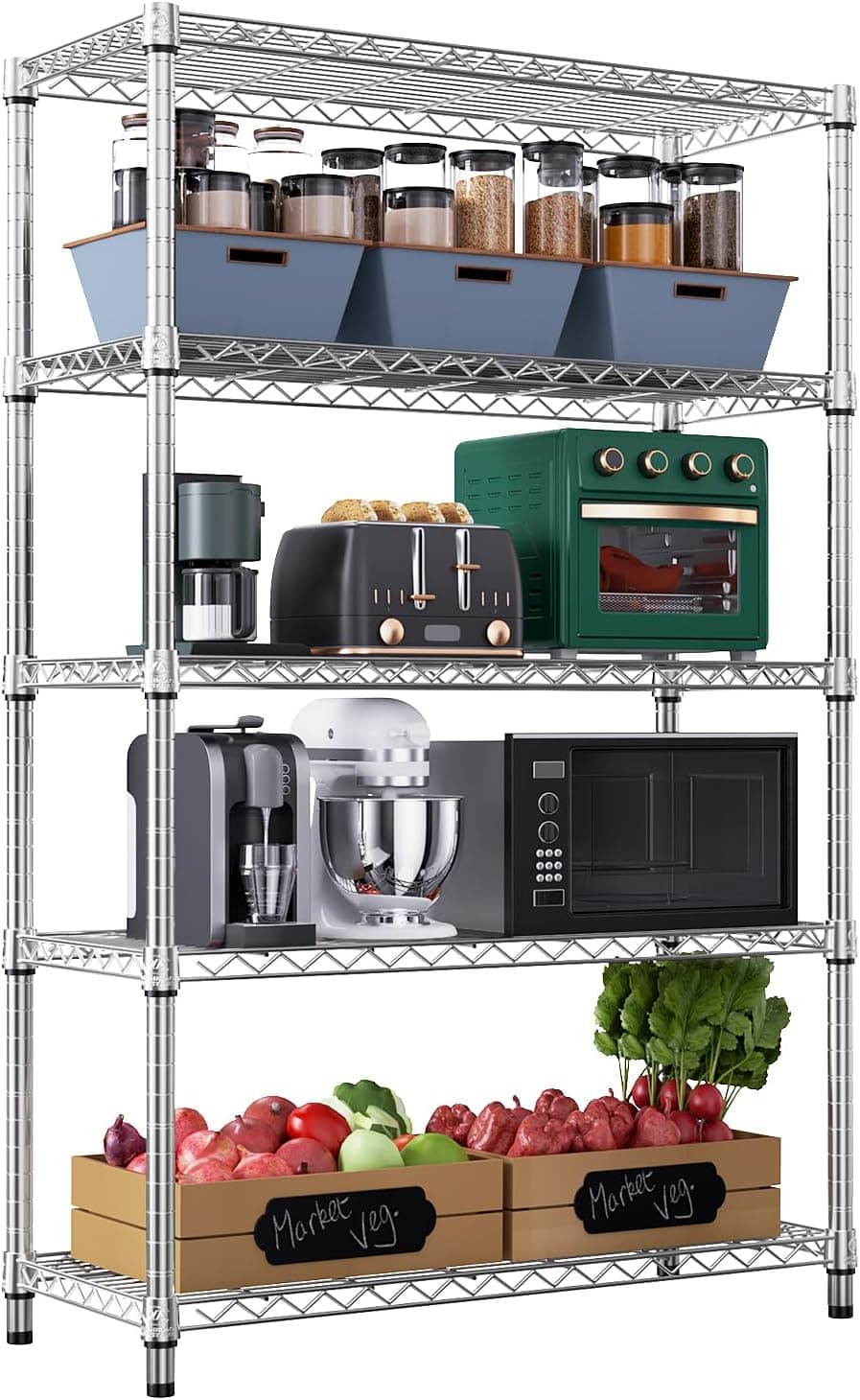
VEVOR 5-Tier Adjustable Rack, 30 x 12 x 60 in
Tiers
5
Total capacity
2000 lb
Stated size
30 x 12 x 60 in
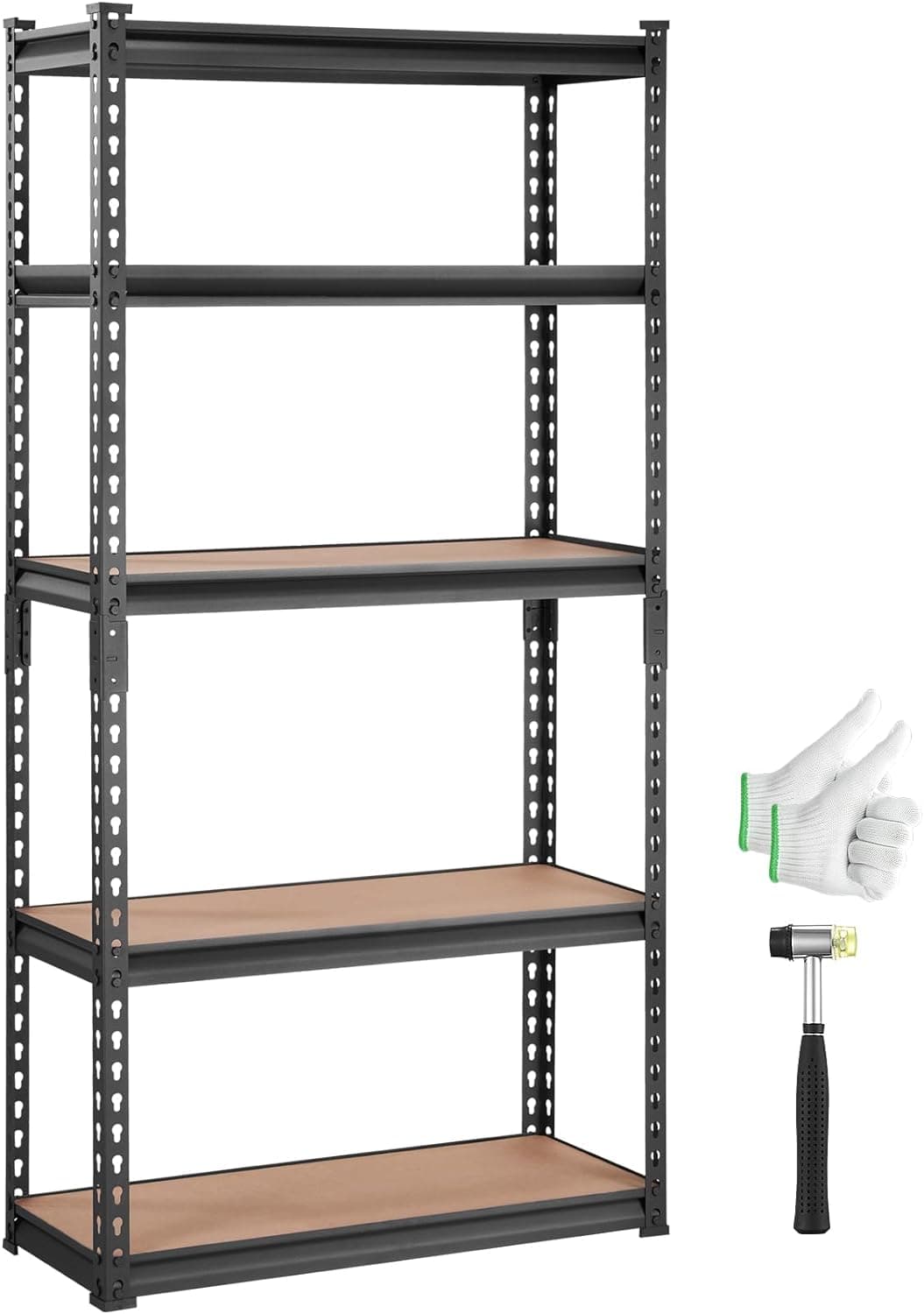
Five adjustable heavy-duty metal shelves with a stated 2000 pound total capacity, at 30 by 12 by 60 inches. Divide the stated total by the footprint and this is the densest capacity claim in the lineup: 2.5 square feet of floor carrying a stated 2000 pounds. For the job this category exists to do, getting load rating out of the floor area you can spare, that ratio is the number that decides it.
The highest stated capacity per square foot of floor in this lineup
A 12 inch depth fits a narrow wall run where deeper units will not go
Adjustable tiers let you size the gaps to what you actually store
Sixty inches tall keeps the top shelf within reach without a step
The stated figure is a total, so the per-shelf share is a division rather than a manufacturer statement
A 12 inch depth will not take a stacked bin or a boxed power tool sideways
A narrow footprint carrying heavy load is exactly the geometry that wants anchoring
Best forA narrow wall run in a garage where floor area is the constraint and the load is dense.
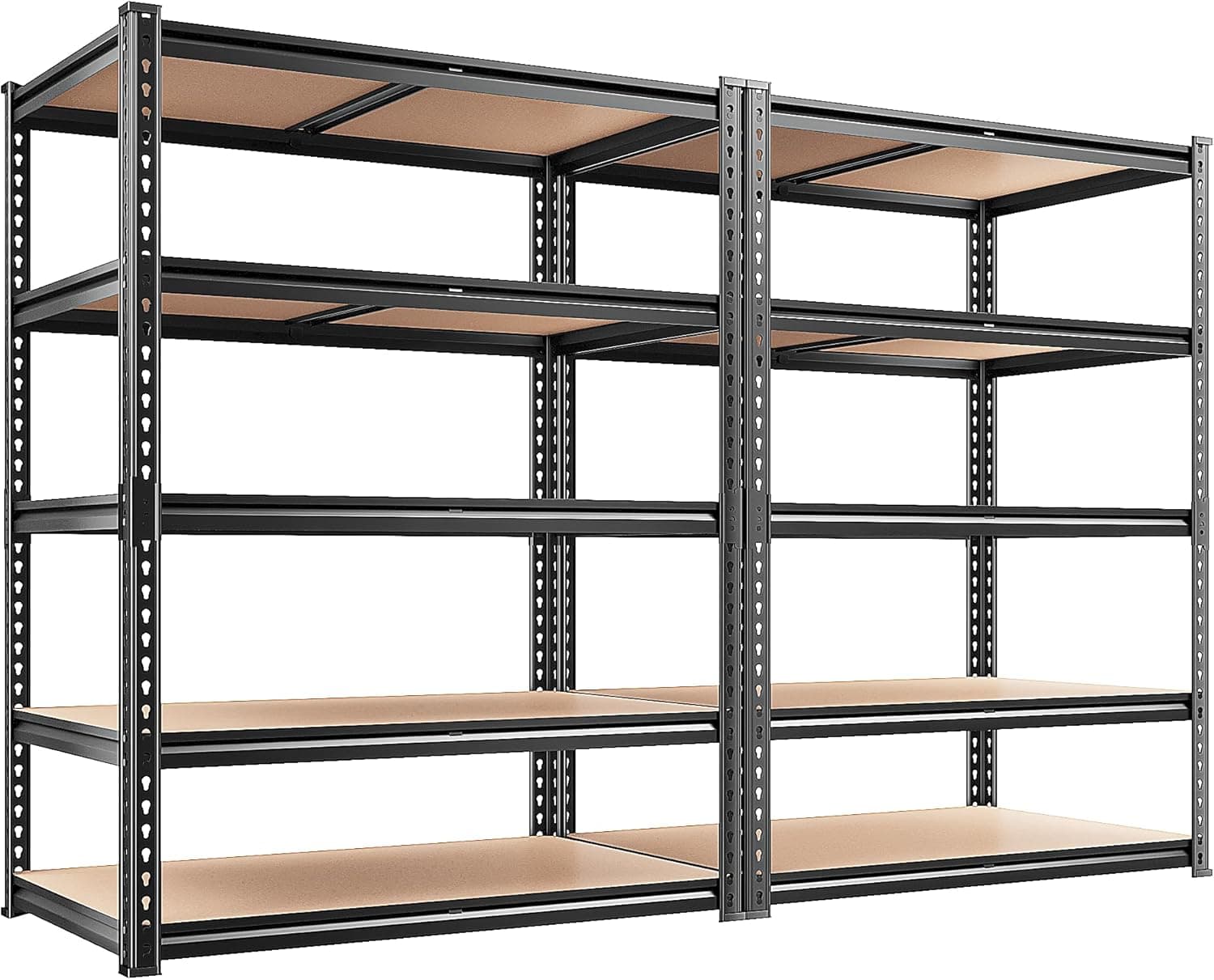
Two five-tier units, each stated at 2400 pounds, on 1.4 mm rolled-edge posts, at 36 by 16 by 72 inches. This is the highest per-unit capacity claim in the lineup and the only one that states a post gauge, which is the sort of specification that usually goes unmentioned. Rolled edges on a shelf are a safety detail as much as a stiffness one.
The highest stated total capacity of any unit here
Post gauge is stated at 1.4 mm, which most listings leave out entirely
Rolled edges are both stiffer and less likely to cut a hand or a bag
Sold as a pair, which suits doing a wall in one go
Seventy-two inches puts the top shelf above shoulder height, which is a lifting problem
Sold only as a two-pack, so it is a large commitment for one wall
The stated capacity is a total, so the per-shelf figure is a division
Best forFitting out a full garage wall at once, where the heavy items go low and the top tier stays light.
Amazon Basics 4-Shelf Wire Unit, 23.2 x 48 x 13.4 in
Shelves
4
Per shelf
200 lb
Stated size
23.2 x 48 x 13.4 in
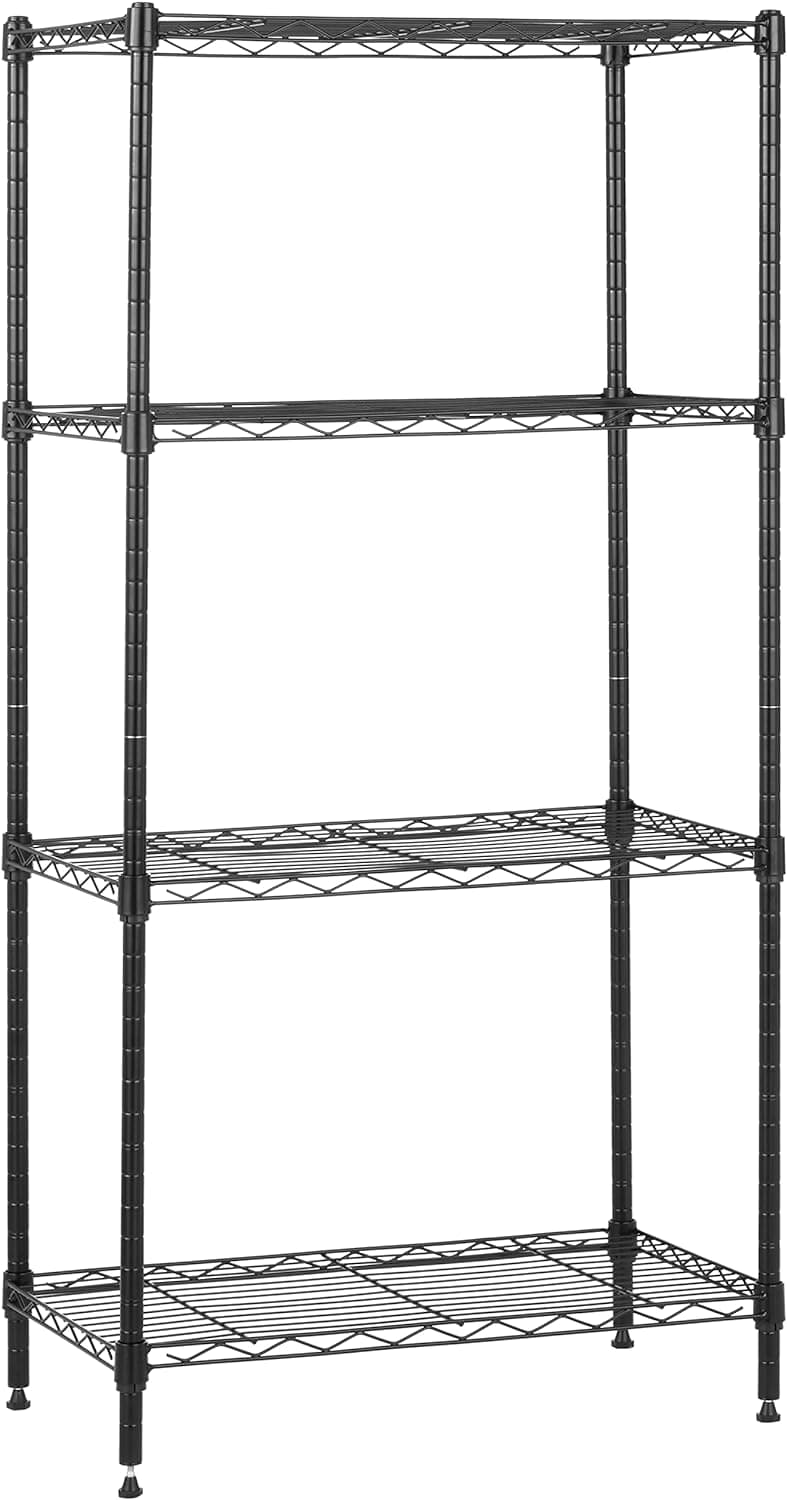
Four adjustable steel wire shelves at a stated 200 pounds per shelf, at 23.2 by 48 by 13.4 inches. This is the only unit in the lineup whose listing states capacity per shelf rather than as a total, which removes the guesswork every other entry here leaves you with. The shelf load planner compares against a per-shelf figure, so this is the one it can use directly.
Capacity is stated per shelf, so no division and no ambiguity
The only listing here that lets you compare directly against a planned shelf load
Forty-eight inches tall keeps every shelf inside easy reach
Wire shelves let light and air through, which matters in a damp garage
Four tiers rather than five, so less storage in the same floor area
Two hundred pounds per shelf is the lowest per-shelf figure available here
Wire shelving lets small items tip through unless you deck it
Best forAnyone who wants to check a planned load against a stated number rather than against a division.
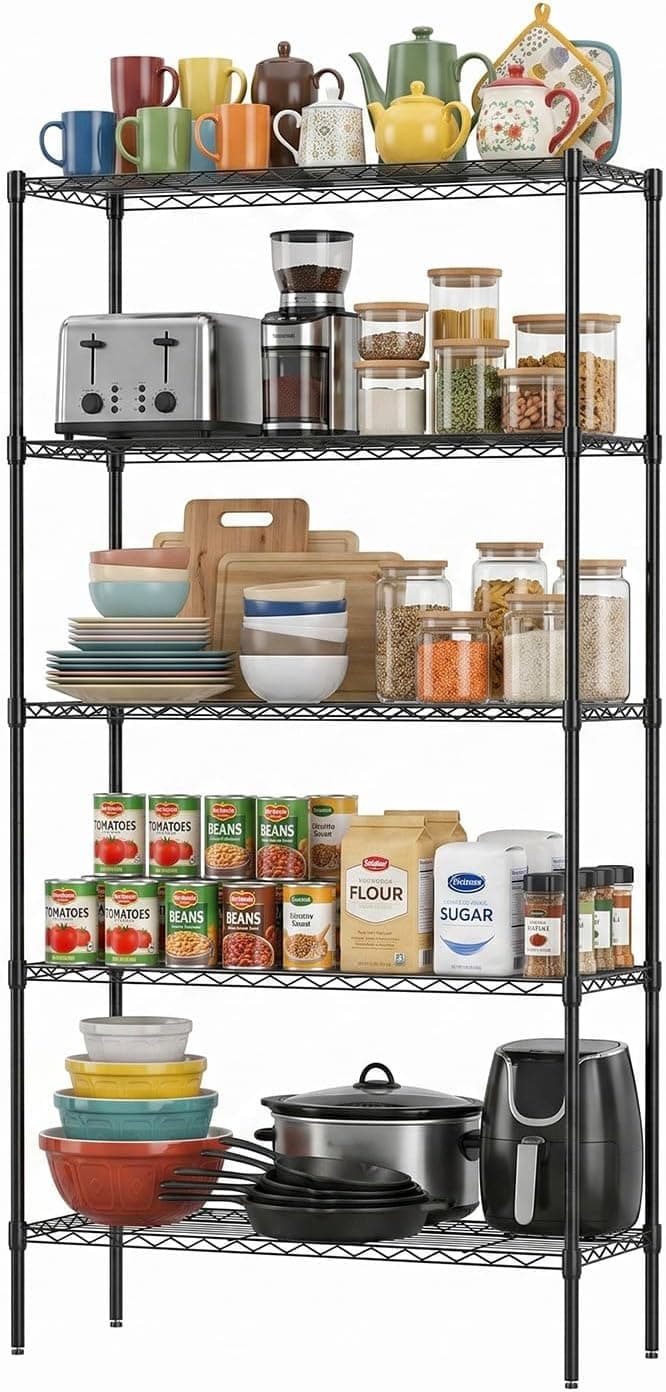
Five rust-resistant wire shelves with a stated 1250 pound capacity and no-tool assembly, at 36 by 14 by 72 inches. Rust resistance is worth more in a garage than in a basement, because a garage cycles through dew point every time the door opens on a cold morning. No-tool assembly means the shelves clip to tapered collars on the posts.
Rust resistance is called out, which suits an unheated garage
No-tool assembly means it goes up in one session without a search for hardware
Thirty-six inches wide takes standard bins two abreast
Five tiers in a 3.5 square foot footprint
The lowest stated total in the full-height group here
No-tool collar systems are awkward to adjust once loaded
A stated total again, so the per-shelf figure is a division
Best forA damp or unheated garage where corrosion will outlast any load question.
Five wire shelves with a stated 1750 pound total, at 17.7 by 47.2 by 72.3 inches. This is the widest unit in the lineup at just over 47 inches, and width is the specification that decides how much goes on a shelf before you start stacking. It is also the specification that decides deflection, which the rating says nothing about.
The widest shelf here, so more fits in a single layer
A 17.7 inch depth takes boxed power tools front to back
Five tiers at full height
Wire construction keeps weight down for a unit this size
A long span is where wire shelving bows, and no rating describes deflection
The lowest stated load per square foot of the full-height units here
Nearly four feet wide needs a clear wall run to place at all
Best forStoring many light and medium items in one layer, where reaching across matters more than density.
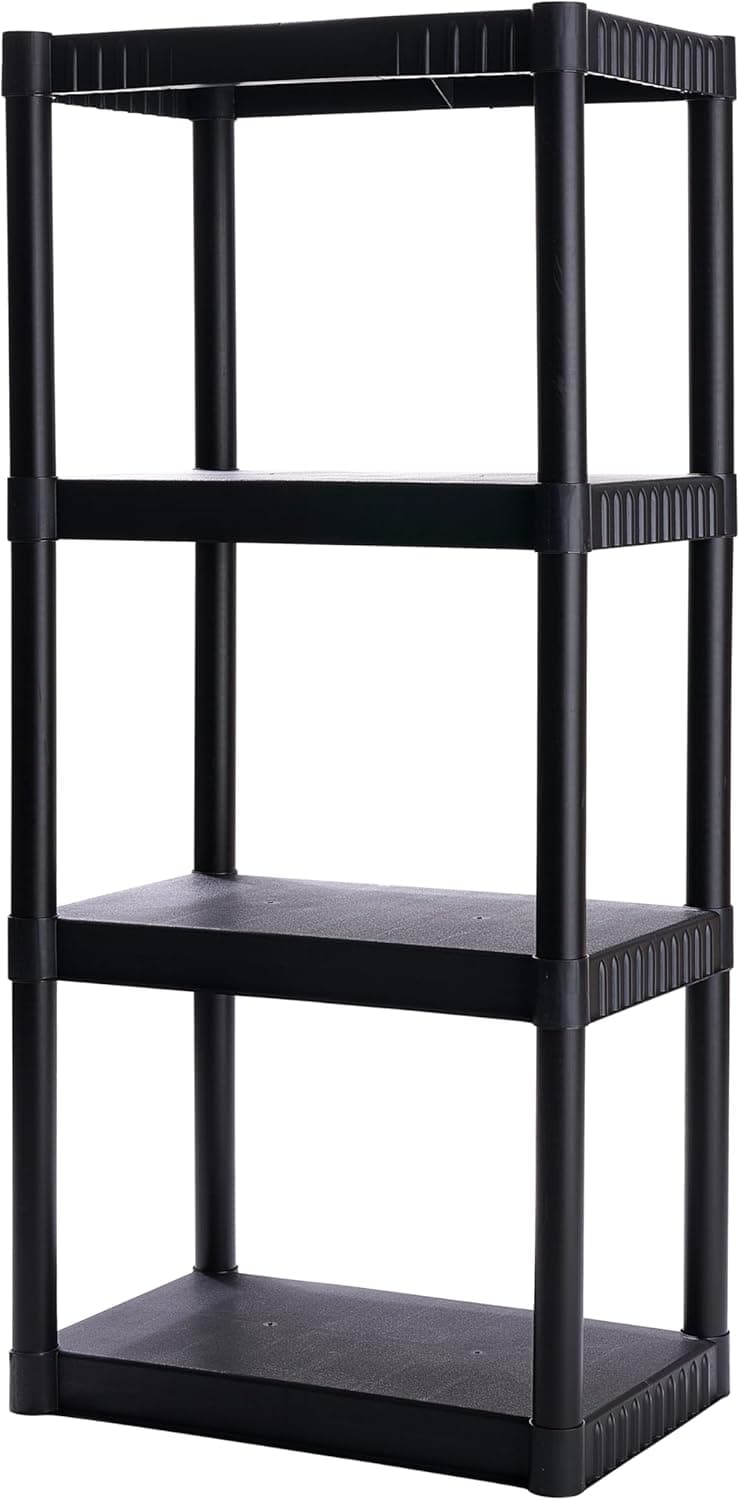
Four plastic shelves with a stated 200 pound capacity and tool-free assembly, at 48 by 23 by 14 inches. The listing states one bare capacity figure without saying whether it is per shelf or for the unit, which is the exact ambiguity the shelf load ratings page warns about. This site reads it the pessimistic way, as a total.
Plastic does not corrode, which suits damp corners and wash-down areas
Tool-free assembly and light enough to move once built
A solid deck rather than wire, so small items do not tip through
The lightest unit here to carry and reposition
The stated capacity does not say whether it is per shelf or per unit
Read as a total, the per-shelf share is the lowest in the lineup
Plastic shelves creep under sustained load in a way steel does not
Best forLight, bulky and damp things such as garden chemicals and cleaning supplies, where corrosion beats capacity.
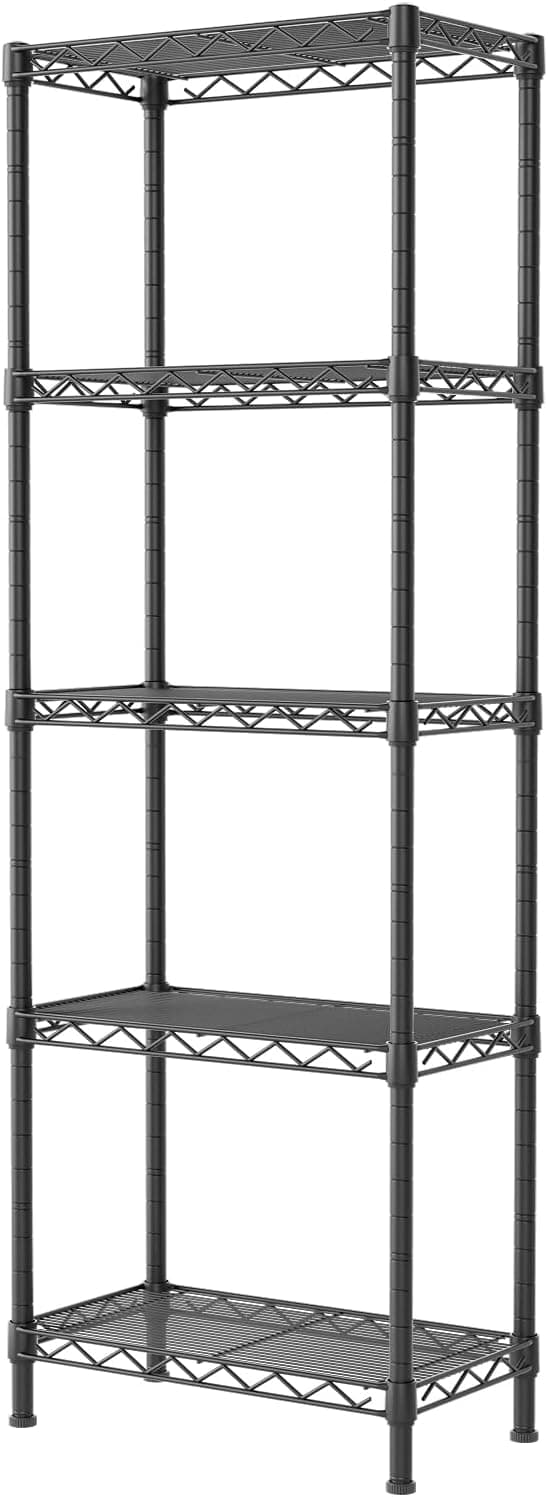
Five adjustable mesh shelves on a narrow footprint, at 10 by 16 by 55 inches. The listing states no capacity figure at all, which is the single most important thing to know about it: the shelf load planner cannot rate it, and neither can you. What it does offer is a 10 inch depth, which fits gaps nothing else here will.
Ten inches deep fits between a door swing and a wall where nothing else does
Five tiers despite the small footprint
Adjustable mesh shelves suit small items that would fall through wire
Fifty-five inches keeps everything within easy reach
No capacity figure is stated anywhere in the listing
Without a rating there is nothing to check a planned load against
A tall narrow unit is the geometry most prone to tipping
Best forA narrow gap where the alternative is no shelving at all, holding light items only.
Tiers, the figure the listing states, and the per-shelf share
Unit
Tiers
As stated
Per shelf
Width
VEVOR 5-Tier Adjustable Rack, 30 x 12 x 60 in
5
2000 lb capacity
400 lb
30 in
REIBII Garage Shelving, 2-pack, 36 x 16 x 72 in
5
2400 lb capacity
480 lb
36 in
Amazon Basics 4-Shelf Wire Unit, 23.2 x 48 x 13.4 in
4
200 lb per shelf
200 lb
23.2 in
FDW 5-Tier Wire Shelf, 36 x 14 x 72 in
5
1250 lb capacity
250 lb
36 in
M MZG 5-Tier Steel Rack, 17.7 x 47.2 x 72.3 in
5
1750 lb capacity
350 lb
47.2 in
Plano 4-Shelf Plastic Unit, 48 x 23 x 14 in
4
200 lb capacity
50 lb
23 in
SINGAYE 5-Tier Narrow Wire Shelf, 10 x 16 x 55 in
5
None stated
Not stated
16 in
Before you trust this
A unit that is stable empty is not stable loaded. Put heavy items on the bottom tiers, keep the top tier light, and fix tall units to the wall before you load them.
Anti-tip fixings belong in a stud, not in hollow drywall. CPSC runs a national tip-over campaign because the failure mode lands on a person, most often a child.
Stated ratings assume an evenly distributed static load. A battery on six inches of span, or a toolbox set down hard, is outside what the number describes.
Fuel, fuel gas and pressurised cylinders are a local code question rather than a load question, and no shelf rating has anything to say about where they may be kept.
Lifespan and care
Wire shelving bows on long spans before it fails. A solid deck laid on top spreads the load and stops bins sliding toward the sag.
Post collars on no-tool systems are awkward to adjust once loaded. Decide the tier spacing before you fill the unit, not after.
A garage crosses the dew point every time the door opens on a cold morning. Rust-resistant finishes matter more here than in a heated basement.
Check the anti-tip fixing once a year. It is the one component whose failure is sudden rather than gradual.
Is the number on the box per shelf or for the whole unit?
It depends on the listing, and many do not say. Where a listing gives one bare figure, this site divides it by the tier count and treats the result as the per-shelf share, because being wrong in that direction costs nothing.
What does evenly distributed actually rule out?
Point loads. A shelf rated for 200 pounds evenly distributed is not rated for 200 pounds sitting on six inches in the middle of the span, and it is not rated for 200 pounds hanging off the front edge. Put concentrated weight directly over a post.
My shelf holds the load but it sags. Is that a problem?
Capacity and stiffness are different tests, and a rating speaks only to the first. A sagging shelf makes bins slide toward the middle, which concentrates the load further and increases the sag. Shorter spans or a solid deck fix it.
Do I really need to anchor a freestanding unit?
If it is tall and carries weight above waist height, yes. Tipping arrives faster than breaking and is far more dangerous, and the conditions that cause it are ordinary: an uneven floor, a unit pulled at from the front, or someone climbing it.